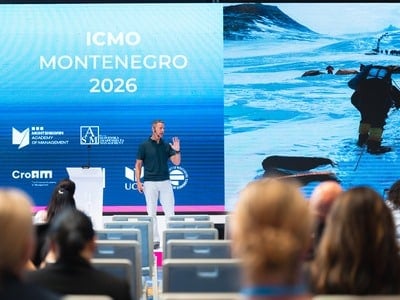
A great corporate motivational speaker does more than stand on a stage and deliver an inspirational speech.
The goal isn’t simply to make people feel motivated for an hour.
The real goal is to create a story, idea, or experience that stays with people long after the event is over and ultimately changes the way they think, communicate, lead, and work together.
I’ve experienced this transformation from both sides.
I spent five seasons in the NFL, where success depended on preparation, accountability, communication, and trust. Years later, I took those same principles into the mountains and completed the Seven Summits, including Mount Everest.
The environments were dramatically different.
But the lessons were remarkably similar.
Whether you’re standing in an NFL locker room or at 29,000 feet on Mount Everest, the people around you matter. Preparation matters. Leadership matters. And when things go wrong as they inevitably do, your ability to respond matters even more.
That’s why I believe powerful stories can become one of the most effective tools for creating lasting change inside organizations.
Why Stories Are More Powerful Than Information Alone
Companies spend enormous amounts of time communicating information.
There are presentations, training sessions, strategy meetings, leadership programs, employee communications, and annual conferences.
But people don’t always remember the information.
They remember the story.
Think about the stories you’ve heard throughout your career that you can still recall years later.
Maybe it was a leader who overcame an impossible challenge.
Maybe it was a teammate who refused to quit.
Maybe it was a business failure that eventually became a turning point.
Or maybe it was a personal experience that completely changed someone’s perspective.
Stories give ideas context.
Instead of simply telling an audience that resilience matters, a story allows them to experience resilience.
Instead of telling employees that teamwork is important, a story can demonstrate what happens when people trust each other—and what happens when they don’t.
Instead of saying that leadership requires accountability, a powerful story can show the consequences of avoiding responsibility.
That distinction matters.
People may forget a statistic. They rarely forget a story that made them feel something.
What the NFL Taught Me About Teamwork
Playing in the NFL taught me something very early:
Individual talent isn’t enough.
Football is an intensely individual sport wrapped inside a team environment.
Every player has a specific responsibility.
A wide receiver has a route to run. A quarterback has a decision to make. An offensive lineman has a block to execute. A coach has a game plan.
But none of those responsibilities exist in isolation.
One person’s performance affects everyone else.
That’s true in business, too.
A sales team depends on marketing.
Marketing depends on the product.
Product depends on operations.
Operations depend on people executing consistently.
Leadership connects all of it.
When teams understand that their individual responsibilities are connected to a larger mission, performance can change.
That’s one of the most important messages I bring to companies as a corporate motivational speaker.
Your role matters but your role doesn’t exist by itself.
The strongest teams understand both sides of that equation.
What Mount Everest Taught Me About Resilience
Years after my NFL career, I found myself pursuing something that seemed completely different: climbing the world’s highest mountains.
I eventually completed the Seven Summits, culminating with Mount Everest on May 23, 2021.
Everest changed my understanding of adversity.
At sea level, it’s easy to talk about resilience.
At 26,000 feet, resilience becomes something entirely different.
The environment doesn’t care about your résumé.
It doesn’t care about your accomplishments.
It doesn’t care how confident you were when you started.
You have to make good decisions when you’re exhausted, uncomfortable, uncertain, and under enormous pressure.
That’s also what happens inside organizations.
Companies face missed targets, economic uncertainty, leadership transitions, employee turnover, competitive threats, failed initiatives, and unexpected crises.
The question isn’t whether adversity will happen.
The question is how your team responds when it does.
That’s where storytelling can become a powerful leadership tool.
The Best Corporate Events Speaker Doesn’t Just Tell a Story
When organizations hire a corporate events speaker, they aren’t simply buying 45 minutes of stage time.
They’re investing in an opportunity to create a shared experience.
The best stories give employees something they can take back to their desks, their teams, and their daily responsibilities.
For example, my Everest experience can become a conversation about:
- Making decisions under pressure
- Preparing for uncertainty
- Building trust
- Managing fear
- Communicating when conditions change
- Supporting teammates
- Taking responsibility
- Staying focused on a long-term objective
- Recovering from setbacks
- Continuing forward when the goal feels impossibly far away
Those lessons aren’t really about climbing.
They’re about leadership.
They’re about people.
They’re about performance.
And they’re about what happens when circumstances become difficult.
From Inspiration to Action
There’s an important difference between temporary inspiration and lasting change.
A motivational speech can create energy.
But energy eventually fades.
For a story to create lasting change, people need to connect the message to something they are actually experiencing.
That’s why I focus on practical takeaways.
After hearing a story about an NFL locker room or climbing expedition, an employee should be able to ask:
How does this apply to me?
Maybe the answer is better communication with a colleague.
Maybe it’s taking greater ownership of a project.
Maybe it’s having a difficult conversation that has been avoided.
Maybe it’s preparing more thoroughly for an important challenge.
Maybe it’s helping a teammate who is struggling.
That’s when the story moves from the stage into the workplace.
The Power of a Shared Story
One of the most valuable things a motivational speaker for companies can create is a shared language.
Imagine an organization where employees begin using a common phrase such as:
“What’s our summit?”
Suddenly, the metaphor becomes part of the culture.
A team can ask:
- What’s our summit?
- What’s standing between us and the summit?
- Are we prepared for the climb?
- Who needs help on the team?
- What happens when conditions change?
- Are we communicating effectively?
- What does success look like?
- What’s the next step?
That is much more powerful than simply hearing a speech and applauding at the end.
A memorable story can become a reference point for future decisions.
What Makes a Story Memorable?
I believe the most powerful stories have several things in common.
1. They are authentic.
People can recognize when a story feels manufactured.
Real experiences create credibility.
My stories come from places I’ve actually been: NFL locker rooms, business leadership, entrepreneurship, high-altitude expeditions, and the challenges that came with each.
2. They include adversity.
Perfect stories aren’t particularly interesting.
The moments that test us are often the moments that teach us the most.
3. They contain a turning point.
Every great story has a moment when something changes.
That turning point gives the audience an opportunity to see a challenge differently.
4. They connect to something bigger.
The best stories aren’t really about the speaker.
They’re about the audience.
My Everest story isn’t important because I climbed Everest.
It’s important if someone in the audience can use something from that experience to lead their team differently on Monday morning.
From the Locker Room to the Boardroom
One of the things I enjoy most about speaking to businesses is discovering how similar high-performance environments really are.
An NFL team and a corporate leadership team may operate in completely different industries.
But both need:
Trust.
Communication.
Accountability.
Preparation.
Resilience.
Leadership.
A shared objective.
The vocabulary may change.
The underlying principles don’t.
That’s why the lessons I learned as an NFL player continue to influence how I think about business leadership today.
And that’s why the lessons I learned on Mount Everest have become such an important part of my speaking.
Why Companies Remember Experiences
A corporate motivational speaker has an opportunity to create more than an inspirational moment.
A powerful presentation can become an experience.
And experiences are often easier to remember than instructions.
Years from now, an employee may not remember every slide from a corporate conference.
But they may remember the story of standing on the South Col of Everest.
They may remember what it feels like to be in the NFL locker room before a game.
They may remember a conversation about what happens when the conditions change.
And they may remember a simple question:
What’s your summit?
That question can become a powerful framework for thinking about personal and professional goals.
My Approach as a Corporate Motivational Speaker
When I speak to organizations, my objective is not to tell people that they should simply “work harder.”
Most people already work hard.
The bigger question is:
Are we working toward the right summit and are we climbing it together?
My presentations combine stories from the NFL, entrepreneurship, leadership, and the Seven Summits with practical lessons about resilience, teamwork, communication, accountability, and overcoming adversity.
The objective is to leave people with something they can use.
Not just something they heard.
The Ultimate Goal: Change After the Applause
The applause at the end of a keynote isn’t the finish line.
It’s the beginning.
The real measure of a successful corporate speaking engagement is what happens afterward.
Does the team communicate differently?
Does a leader approach a challenge differently?
Does someone take greater ownership?
Does a team member step up for a colleague?
Does the organization become more comfortable talking about adversity?
Does the audience have a common language for discussing their goals?
That’s the kind of impact I believe a great corporate motivational speaker should pursue.
Because inspiration is valuable.
But inspiration that leads to action is transformational.
What Is Your Summit?
Every organization has a summit.
It might be a revenue goal.
A culture transformation.
A new product.
A merger.
A turnaround.
A leadership transition.
Or simply becoming a better version of the organization you already are.
The path won’t always be easy.
There will be setbacks.
There will be uncertainty.
There will be moments when turning around feels easier than continuing forward.
That’s when the story matters.
Because the right story can remind a team why the goal matters, what they’re capable of accomplishing, and why they don’t have to make the climb alone.
I’ve learned that on football fields, in business, and on the world’s highest mountains.
The summit may be different for every organization.
But the climb is where transformation happens.
Looking for a Corporate Motivational Speaker?
If your organization is planning a leadership conference, corporate meeting, sales kickoff, executive retreat, or employee event, I bring lessons from five seasons in the NFL, entrepreneurship, the Seven Summits, and my ascent of Mount Everest to the stage.
My goal is simple:
Tell stories people remember.
Deliver lessons people can use.
Create conversations that continue long after the event ends.
Because every person, every team, and every organization has a summit.
The question is: What’s yours?
Book Mark: www.MarkPatttisonNFL.com