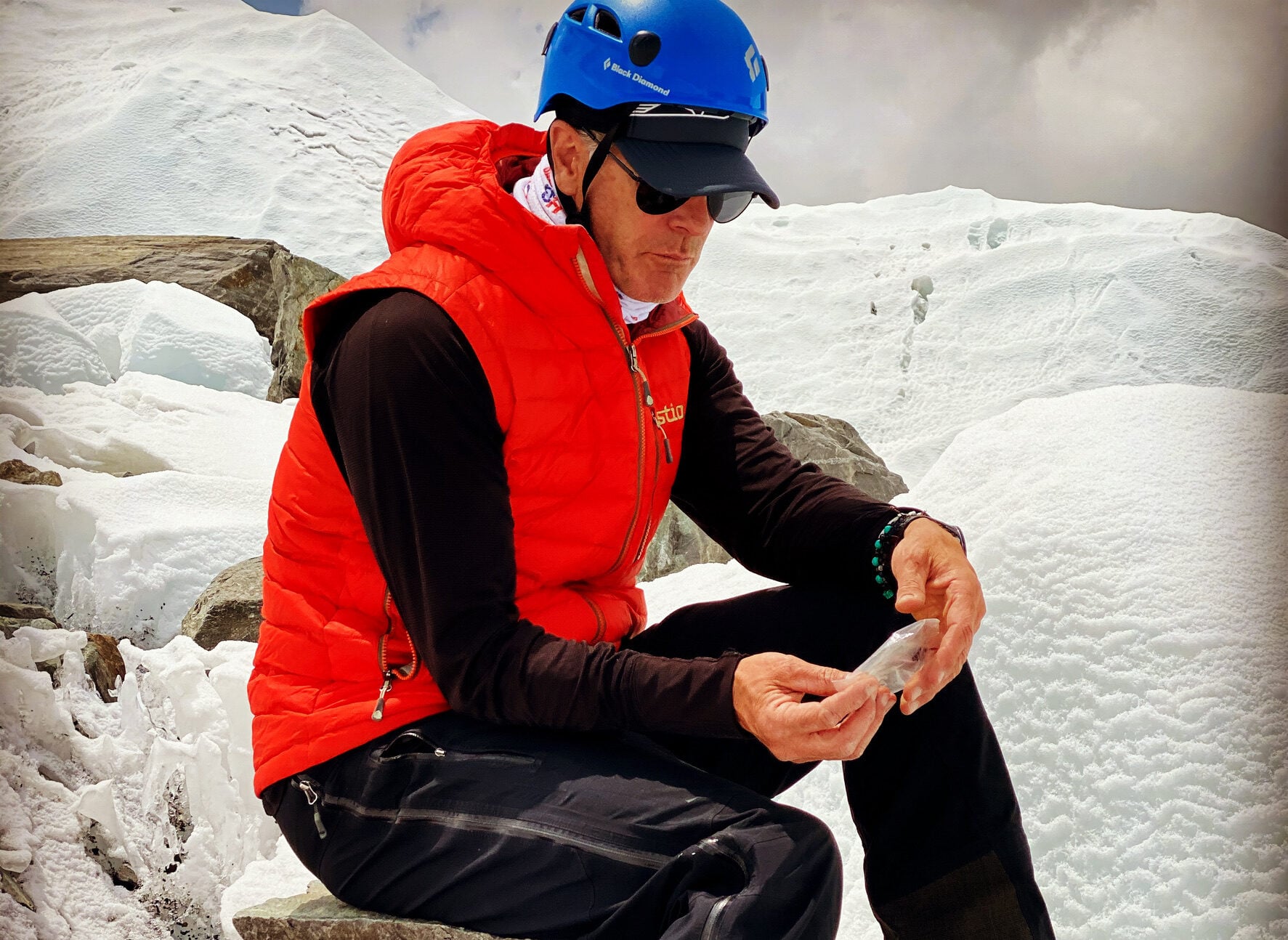
My Psychology of Achieving Impossible Goals: How everyday Extraordinary People Turn the Unreachable Into Reality
Most people don’t fail because their goals are too difficult. They fail because they underestimate what is possible, lose belief during the process, or never develop the mindset required to achieve something bigger than themselves.
The difference between ordinary achievement and extraordinary achievement is rarely talent alone. It comes down to psychology—the ability to commit to a vision before there is evidence it can happen, stay disciplined through uncertainty, and continue moving forward when the goal feels impossible.
Whether you are climbing a literal mountain like Everest, building a business, leading a team, reinventing your career, or pursuing a personal breakthrough, achieving impossible goals requires a different way of thinking.
The biggest goals require a bigger version of yourself. That’s what I call a BHAG (Big Hairy Audacious Goal).
Why People Give Up on Big Goals
When people set ambitious goals, they often begin with excitement. They create a vision, make a plan, and feel motivated.
But motivation is temporary.
The moment challenges appear, doubt begins to creep in.
People often abandon big goals because:
1. They Focus on the Distance Instead of the Next Step
When someone looks at a massive goal, the gap between where they are and where they want to go can feel overwhelming. So, they quit.
Climbing Everest is a perfect example. A person standing at the base of the mountain cannot focus on the summit 29,000 feet above them. The mountain is too intimidating.
Instead, successful climbers focus on the next camp, the next step, and the next decision.
The same principle applies in life.
A CEO doesn’t build a company overnight.
An athlete doesn’t become a champion after one workout.
A leader doesn’t create a high-performing culture with one meeting.
Impossible goals are achieved through consistent progress. They chunk it up bit by bit.
2. They Let Fear Become the Decision Maker
Fear is one of the biggest barriers to achieving goals.
People fear failure.
They fear looking foolish.
They fear investing time and energy into something that may not work.
But extraordinary achievers understand something important:
Fear is not a stop sign.
Fear is often proof that the goal matters.
The question is not, “How do I eliminate fear?”
The better question is:
“How do I move forward even when fear is present?” I also like to talk about Action creating Re-Action. Don’t be stuck.
The Mindset Behind Extraordinary Achievement
People who achieve extraordinary things think differently.
They do not believe success happens because everything goes according to plan. They believe they can adapt, learn, and overcome obstacles.
This is the mindset of possibility. Focusing day by day and what is in front of you can go along way.
They Believe Before They See
Every major achievement begins as something that does not yet exist.
Before someone reaches a summit, wins a championship, launches a company, or transforms their life, there is a moment where belief comes before proof.
This is where vision becomes powerful. This is called the ROADMAP. I also call it my SUMMITS model which I have used over the years.
A compelling vision creates the emotional connection needed to continue when the process becomes difficult.
They Develop a Growth Mindset
A fixed mindset says:
“I’m not capable of this.”
A growth mindset says:
“I’m not capable of this yet.”
That one word changes everything.
People who achieve impossible goals view obstacles as information.
Failure is not an identity.
Failure is feedback. Also, surround yourself with positive people. You can’t achieve big things with negative weight holding you back.
Everest: A Case Study in Achieving Impossible Goals
Everest represents one of the greatest examples of human achievement.
For decades, climbing Everest was considered impossible. The extreme altitude, unpredictable weather, physical demands, and mental challenges made it one of the most dangerous pursuits on earth.
But those who successfully climb Everest understand a powerful truth:
The summit is not reached in one giant leap.
It is reached through preparation, strategy, teamwork, resilience, and thousands of small decisions.
Successful climbers spend months preparing.
They train their bodies.
They study the route.
They prepare for setbacks.
They build the mental toughness required to continue.
I even watched YOU TUBE videos to prepare for what was in store.
The mountain does not care about motivation.
It rewards preparation.
The same is true in leadership and life.
Your biggest goals require preparation before execution.
Overcoming Fear and Self-Doubt
Self-doubt is normal when pursuing something meaningful.
The mistake people make is believing confident people never doubt themselves.
The truth is the opposite.
High performers experience doubt, but they have developed strategies to manage it.
Here are three ways to overcome self-doubt:
1. Separate Emotion From Reality
Your feelings are real, but they are not always accurate.
Feeling unprepared does not mean you are unprepared.
Feeling afraid does not mean you should stop.
Successful people learn to make decisions based on values and strategy—not temporary emotions. Bottom line, all this takes discipline and discipline doesn’t care about feelings.
2. Build Evidence Through Action
Confidence is not created by thinking.
Confidence is created by keeping promises to yourself.
Every workout completed.
Every difficult conversation handled.
Every small commitment fulfilled.
These moments create evidence that you are capable. What is really does more than anything is build confidence that you can do it.
3. Surround Yourself With the Right People
Impossible goals are rarely achieved alone.
Elite performers understand the importance of coaches, mentors, teammates, and communities that challenge them.
Your environment either expands your belief or limits it. John Wooden always talked about surrounding yourself with people that are, in your mind, better than you.
Long-Term Planning Techniques for Big Goals
Achieving impossible goals requires patience and strategy.
A powerful approach is to think in three levels:
The Summit Vision
What is the ultimate outcome you want?
Examples:
- Become a CEO
- Build a successful business
- Transform your health
- Create a lasting legacy
The summit creates direction. SUPER KEY you think BIG..
The Milestones
Break the big goal into measurable checkpoints.
Instead of:
“I want to transform my career.”
Create milestones:
- Develop new skills
- Build relationships
- Create opportunities
- Take strategic risks
Milestones create momentum.
The Daily Actions
The final level is execution.
What must happen today?
The greatest achievements are built through ordinary actions repeated consistently.
Daily Execution Habits of High Achievers
Big goals are achieved through daily systems.
Here are habits that drive extraordinary performance:
Start With Clarity
Every day, know your most important priority.
Ask:
“What action today moves me closer to the summit?”
Focus on Consistency Over Intensity
Many people chase motivation.
High performers build discipline.
Small actions repeated over time create massive results.
Review and Adjust
Successful people constantly evaluate:
What worked?
What didn’t?
What needs to change?
Measure, MOVE, Improve..
Progress requires reflection.
A Goal-Achievement Framework: The EVEREST Method. I LOVE THIS ONE.
To achieve impossible goals, use this framework:
E — Envision Your Summit
Define exactly what you want to achieve.
V — Validate Your Why
Your purpose must be stronger than your obstacles.
E — Execute Daily
Small consistent actions create momentum.
R — Respond to Challenges
Obstacles are part of the journey.
E — Elevate Your Mindset
Develop the belief required for your next level.
S — Surround Yourself With Excellence
Build relationships with people who raise your standards.
T — Take the Next Step
Progress happens one decision at a time.
To Know about Mark Pattison to Keynote TEDx Dallas
The Greatest Goals Require a Greater Version of You
The pursuit of impossible goals is not just about reaching the destination.
It is about becoming the person capable of reaching it.
The mountain changes you.
The challenge changes you.
The journey changes you.
Whether your Everest is climbing a mountain, leading an organization, reinventing your career, or creating something meaningful, the process begins with one question:
What is the next summit you are willing to pursue?
FAQ
Achieving impossible goals requires belief, resilience, discipline, and the ability to continue despite uncertainty. The mindset behind extraordinary achievement focuses on growth, adaptability, and consistent action.
People often quit because they underestimate the time required, focus too much on obstacles, lose motivation, or allow fear and self-doubt to control their decisions. Remember: Where your focus goes your energy always follows.
Effective goal-setting strategies include creating a clear vision, breaking goals into milestones, developing daily habits, tracking progress, and adjusting when needed. Also, don’t forget to write your goals down.
Everest demonstrates that major achievements require preparation, teamwork, resilience, and focusing on the next step rather than becoming overwhelmed by the entire journey. Also, you need to get your mind right before you ever land in Katmandu, Nepal.
Fear can be managed by focusing on action, building confidence through small wins, developing preparation, and surrounding yourself with people who support growth. This is a big one.
Successful people are not necessarily people without obstacles. They are people who continue moving forward despite obstacles. Another thing, success leaves clues so study successful people and they can help lead you in the right directions.
Author Bio
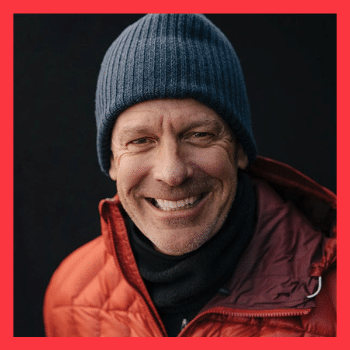
Mark Pattison is a former NFL player, entrepreneur, author, and internationally recognized keynote speaker. As the first former NFL player to complete the Seven Summits, he inspires audiences worldwide with powerful insights on leadership, resilience, peak performance, and overcoming adversity.
Read Full Bio ➜