When organizations look for a keynote speaker who can inspire people to think bigger, perform under pressure, and lead through adversity, they often look beyond traditional business speakers.
That is where a Seven Summits speaker can offer a very different perspective.
Climbing the Seven Summits—the highest mountain on each continent—is one of the world’s most demanding mountaineering achievements. It requires years of preparation, physical endurance, mental toughness, teamwork, risk management, adaptability, and the ability to keep moving forward when conditions become difficult.
But the real value of a Seven Summits speaker isn’t simply that they climbed seven mountains.
It’s what those mountains can teach a team about leadership, resilience, communication, accountability, preparation, and achieving seemingly impossible goals.
I know this journey firsthand.
I am Mark Pattison, a former NFL player and longtime Sports Illustrated executive who completed the Seven Summits, including Mount Everest in 2021. My experiences in professional football, business, and high-altitude mountaineering have shaped the message behind my Finding Your Summit keynote.
Here is what meeting planners should know when considering a Seven Summits speaker for their next event.
What Is a Seven Summits Speaker?
A Seven Summits speaker is generally someone who has successfully climbed the highest mountain on each of the world’s seven traditional continents:
- Mount Everest — Asia
- Aconcagua — South America
- Denali — North America
- Mount Kilimanjaro — Africa
- Mount Elbrus — Europe
- Mount Vinson — Antarctica
- Mount Kosciuszko — Australia
There are different interpretations of the Seven Summits, particularly regarding the highest peak in Australia/Oceania. Some climbers pursue the Carstensz Pyramid instead of Mount Kosciuszko.
But completing the Seven Summits is about much more than checking seven mountains off a list.
Each expedition presents different challenges. Weather can change rapidly. Teams must make difficult decisions. Physical exhaustion becomes a factor. Equipment and logistics matter. And sometimes the most important decision a climber can make is knowing when to turn around.
Those lessons translate directly into the business world.
Who Qualifies as a Seven Summits Speaker?
There is no official professional certification required to call yourself a Seven Summits speaker.
However, meeting planners should look for more than someone who has simply reached seven summits.
A compelling Seven Summits keynote speaker should be able to connect the mountain experience to the challenges facing an audience.
Look for someone who can demonstrate:
1. Authentic Seven Summits Experience
The speaker should have actually completed the Seven Summits and be able to speak authentically about the preparation, setbacks, risks, successes, and lessons involved.
2. Experience Beyond the Mountain
The strongest speakers can connect mountaineering to experiences in business, sports, leadership, entrepreneurship, or other high-performance environments.
The audience shouldn’t leave thinking, “That was a great story about climbing a mountain.”
They should leave thinking:
“How can I apply that lesson to my team and my life?”
3. A Compelling Story
The best keynote speakers use their experiences to tell a story.
The mountain becomes the backdrop.
The lesson becomes the message.
4. Practical Takeaways
A keynote should give an audience something they can use after the event.
That could include better communication, stronger accountability, improved preparation, greater resilience, or a different approach to overcoming adversity.
What Does a Seven Summits Speaker Talk About?
The mountains provide powerful metaphors for some of the biggest challenges organizations face.
Leadership
On a mountain, leadership isn’t about having the loudest voice.
It’s about making good decisions when the consequences are real.
Great leaders know when to push forward, when to listen, when to change course, and when to put the team ahead of themselves.
Those same principles apply in the boardroom.
Resilience
Every major goal includes setbacks.
The question isn’t whether adversity will happen.
It’s how you respond when it does.
Mountaineering teaches resilience because success rarely comes without discomfort, uncertainty, and unexpected obstacles.
Organizations face their own versions of those challenges every day.
Teamwork
No one climbs Everest—or builds a successful organization—entirely alone.
High-performing teams depend on trust, communication, accountability, and a willingness to support one another.
The mountain provides an unforgettable way to demonstrate why individual talent isn’t enough.
The strongest teams succeed together.
Preparation
Summit day gets most of the attention.
But the real work happens long before the summit.
Training. Planning. Logistics. Equipment. Strategy. Team selection. Contingency planning.
The same principle applies to business:
Preparation creates the opportunity for performance.
Communication
At high altitude, communication can become a matter of life and death.
In business, poor communication may not carry the same physical consequences—but it can still destroy trust, create confusion, and prevent teams from achieving their goals.
Clear communication is one of the foundations of high-performing teams.
Grit and Perseverance
There are moments on a mountain when quitting feels easier than continuing.
There are also moments in business and life when the same thing happens.
A Seven Summits speaker can demonstrate what it means to keep moving forward when the goal is still far away.
Risk and Decision-Making
Mountaineering requires constant risk assessment.
Weather. Altitude. Fatigue. Team dynamics. Route conditions.
The objective isn’t to eliminate risk.
It’s to understand it, manage it, and make intelligent decisions.
That is a valuable lesson for executives and business leaders navigating uncertainty.
Why Do Meeting Planners Book Seven Summits Speakers?
Meeting planners are constantly searching for speakers who can provide something memorable and meaningful.
A Seven Summits speaker brings an experience that immediately captures attention.
But the best mountain speakers go beyond inspiration.
They connect an extraordinary experience to an organization’s everyday challenges.
That combination can make a keynote especially effective for:
- Corporate leadership conferences
- Sales meetings
- Executive retreats
- Employee engagement events
- Association conferences
- Sports organizations
- Healthcare organizations
- Financial services conferences
- Entrepreneurship events
- Military and first-responder organizations
- College and university programs
The subject matter is universal.
Everyone has a mountain to climb.
My Seven Summits Journey
My own journey to the Seven Summits began long after my NFL career.
I had already experienced high-performance environments as a professional athlete and later spent years building businesses and working in media, including a decade as a senior executive at Sports Illustrated.
But mountaineering introduced an entirely different definition of performance.
The final mountain was Mount Everest.
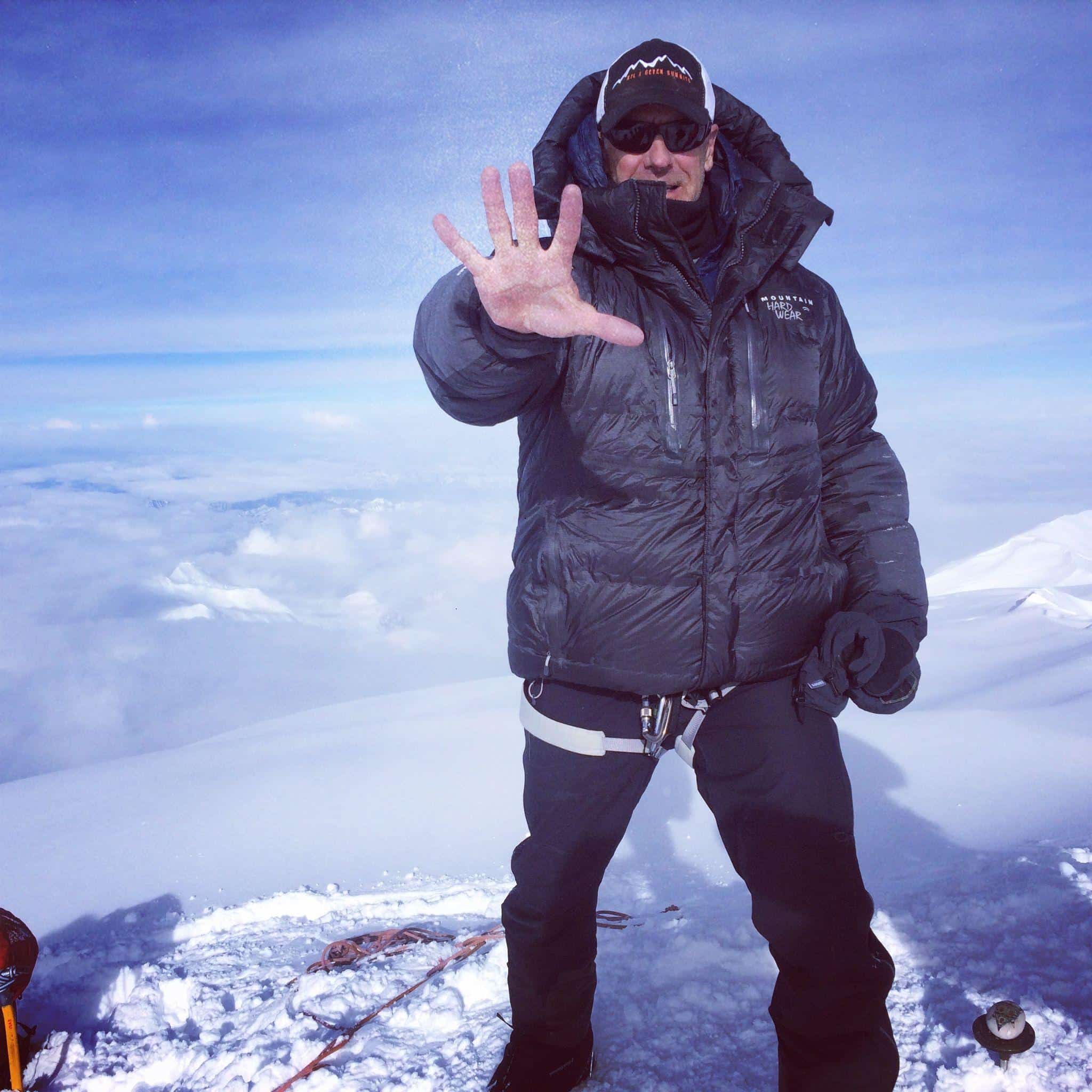
On May 23, 2021, I reached the summit of Everest and completed the Seven Summits.
The experience became the subject of an NFL Films documentary, Searching for the Summit, which later won an Emmy for Best Picture.
But reaching the summit wasn’t the end of the story.
It became the beginning of a new question:
How do we take the lessons learned at the highest places on Earth and apply them to everyday life?
That question became the foundation of my Finding Your Summit message.
Finding Your Summit
My keynote isn’t really about mountains.
It’s about people.
Everyone has a summit.
For one person, it might be becoming a better leader.
For another, it might be building a company, changing careers, overcoming adversity, improving a team, or simply finding the courage to pursue something they once believed was impossible.
My approach is to use lessons from the NFL, business, entrepreneurship, and the Seven Summits to help audiences think differently about their own challenges.
The message centers around concepts including:
Resilience. Reliability. Grit. Teamwork. Adversity. Communication. Leadership.
Because the biggest summit most people will ever climb isn’t Mount Everest.
It’s their own.
What Should Meeting Planners Look For?
If you’re evaluating a Seven Summits speaker, don’t simply ask:
“Did they climb the Seven Summits?”
Ask:
- Can they tell a compelling story?
- Can they connect the experience to business?
- Will the audience leave with practical takeaways?
- Can they customize the keynote to our organization?
- Do they understand leadership and teamwork?
- Can they energize an audience without relying solely on mountain stories?
- Does their experience demonstrate credibility beyond mountaineering?
The mountain gets people into the room.
The message is what makes the keynote valuable.
The Bottom Line
A Seven Summits speaker brings something few other keynote speakers can replicate: firsthand experience operating in some of the most challenging environments on Earth.
But the real value isn’t the altitude.
It’s the perspective.
The Seven Summits teach lessons about preparation, perseverance, teamwork, leadership, communication, risk, and the importance of continuing to move forward—even when the summit seems impossibly far away.
For meeting planners searching for a keynote speaker who can combine elite sports, business leadership, mountaineering, adversity, and an unforgettable personal story, a Seven Summits speaker can provide a powerful experience.
And ultimately, the message is simple:
The summit isn’t just a place you reach. It’s a goal you decide is worth climbing toward.
If you’re looking for a Seven Summits keynote speaker for your next corporate event, leadership conference, executive retreat, or association meeting, I’d love to talk about how the Finding Your Summit message can be customized for your audience.
Mark Pattison
Seven Summits Mountaineer | Former NFL Player | Emmy Award Winner | Former Sports Illustrated Executive | Keynote Speaker
Finding Your Summit