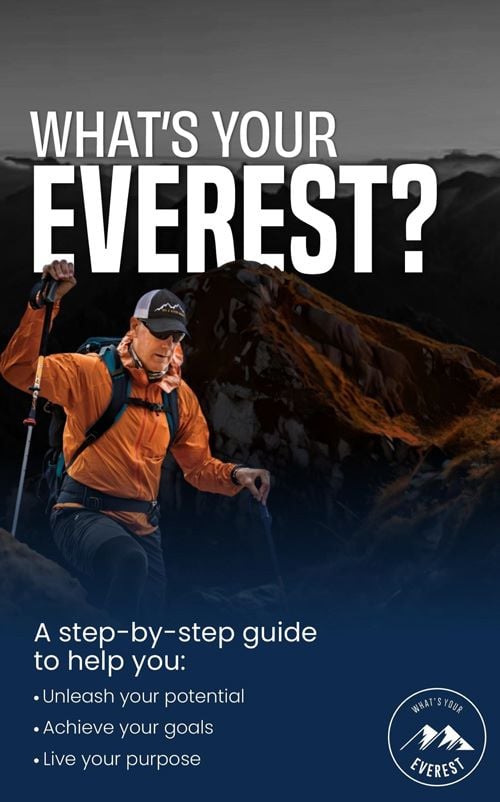
What happens when the career that defined you comes to an end? For former NFL wide receiver Mark Pattison, the answer was to pursue a challenge that would take him from the football field to the summit of Mount Everest, and reveal powerful lessons about leadership, resilience, and reinvention.
Success in one chapter of life does not guarantee success in the next. The skills that help someone excel in professional sports, build a business, or lead an organization can provide a foundation for future achievement. But applying those skills in an entirely new environment requires humility, adaptability, and the willingness to start over.
Mark Pattison’s journey from the NFL to the Seven Summits offers a powerful example of how the principles of high performance can translate across careers, industries, and seemingly impossible challenges.
Today, his story provides a framework for organizations seeking to develop stronger leaders, build resilient teams, and help people navigate change.
From the NFL to a New Summit
Mark Pattison spent five seasons playing in the NFL, including time with the Oakland Raiders and New Orleans Saints. Professional football taught him the importance of preparation, accountability, teamwork, and performing under pressure.
But when his playing career ended, a new question emerged: What comes next?
Rather than allowing his identity to remain tied exclusively to football, Mark pursued opportunities in business and media. He built an entrepreneurial career, founded a venture-backed board game company that was later acquired, and held senior leadership roles in sports media.
His experience included helping build Sports Illustrated’s team-site network into a major digital sports business.
Yet professional accomplishments were only part of the story. Mark also wanted to challenge himself in a completely different arena.
That ambition led him to mountaineering.
The mountains presented a new set of demands. Athletic ability alone was not enough. Mark had to develop new technical skills, prepare for extreme environments, manage risk, work with experienced climbing teams, and confront uncertainty at elevations where mistakes can have serious consequences.
His goal became climbing the highest mountain on each of the seven continents—the Seven Summits.
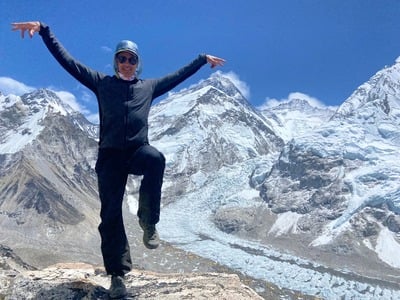
On May 23, 2021, Mark reached the summit of Mount Everest, completing his Seven Summits journey.
His achievement was not simply the completion of a climbing objective. It represented the culmination of years of preparation, persistence, teamwork, and personal reinvention.
Why Career Reinvention Is a Leadership Skill
Mark’s transition from professional football to business and mountaineering highlights an important lesson for leaders: Your identity may be shaped by what you have accomplished, but your future depends on what you are willing to learn.
In business, careers rarely follow a perfectly predictable path. Executives face industry disruption. Entrepreneurs encounter setbacks. Professionals reach points where their previous roles no longer provide the same opportunities for growth.
Athletes experience this transition in a particularly visible way because professional sports careers are finite. But the underlying challenge applies to anyone whose identity is closely connected to a position, company, or professional achievement.
Successful reinvention requires several capabilities.
1. The Willingness to Become a Beginner Again
In the NFL, Mark had years of experience competing at the highest level of professional football. On a mountain, however, he had to learn an entirely different discipline.
That shift required a willingness to listen, learn, accept feedback, and respect the experience of others.
Leaders can face the same challenge when entering a new industry, taking on a different role, or managing a team with expertise they do not possess.
The strongest leaders are not necessarily the people who know everything. They are the people who can recognize what they do not know and learn quickly.
Corporate takeaway: Encourage a culture in which asking questions, seeking feedback, and developing new skills are viewed as strengths rather than signs of weakness.
2. Building a New Identity Around Purpose
A major career transition can leave people asking who they are without the title, position, or recognition they once had.
Mark’s journey demonstrates the value of pursuing a goal that creates a new sense of direction.
The Seven Summits became a challenge that demanded long-term commitment and gave him a new objective beyond his football career.
For executives and professionals, reinvention begins with a similar question: What do I want to accomplish in the next chapter, and why does it matter?
A clear purpose helps people move beyond what they have already achieved and focus on what remains possible.
Corporate takeaway: Help employees and leaders connect their daily responsibilities to meaningful goals, particularly during periods of organizational change.
3. Turning Ambition Into a Plan
Climbing Mount Everest is not accomplished through motivation alone. It requires extensive preparation, training, logistics, judgment, and a willingness to respect the risks involved.
The same principle applies to business.
An organization cannot achieve an ambitious revenue target, enter a new market, or transform its culture simply by announcing a goal. Leaders must translate ambition into measurable milestones, assign responsibilities, prepare for obstacles, and adjust as circumstances change.
Mark’s experience reinforces the distinction between wanting to reach the summit and doing the work required to get there.
Corporate takeaway: Establish clear objectives, define the next steps, measure progress, and prepare for setbacks before they occur.
What Everest Teaches Us About Corporate Resilience
Resilience is often described as the ability to bounce back from adversity. In practice, it also involves adapting to changing conditions, making difficult decisions, and continuing to work toward a goal when the outcome is uncertain.
On Everest, weather, altitude, fatigue, and other environmental factors can change the circumstances of an expedition. Climbers must respond to conditions rather than assume the original plan will always work.
Organizations face their own forms of uncertainty: changing customer expectations, competitive pressure, economic shifts, technological disruption, and unexpected operational challenges.
While a corporate environment is not the same as a high-altitude expedition, the underlying leadership principles offer useful parallels.
Resilient Leaders Adapt Without Losing Sight of the Goal
A plan provides direction, but effective leaders recognize when conditions require a different approach.
The ability to adjust is not the same as abandoning a goal. It is the ability to find a responsible path forward as circumstances evolve.
For business leaders, this means regularly evaluating assumptions, listening to the people closest to a problem, and making decisions based on current realities.
Resilient Teams Communicate Clearly
In demanding environments, communication is essential to coordination, trust, and sound decision-making.
The same is true in organizations. Teams perform more effectively when people understand their responsibilities, communicate concerns early, and know how their work supports the broader objective.
A culture in which employees can raise concerns and share information helps leaders identify problems before they become larger setbacks.
Resilience Includes Knowing When to Reassess Risk
Determination is valuable, but determination without judgment can become dangerous.
Mountaineering requires respect for conditions, preparation, and the limits of what a team can safely accomplish. Business leaders also need to distinguish between productive persistence and continuing with a strategy that no longer makes sense.
Sometimes leadership means pushing through resistance. At other times, it means changing course, protecting the team, or delaying a decision.
True resilience is not simply refusing to quit. It is having the judgment to know how to move forward.
From Individual Performance to Team Success
Professional football and mountaineering may appear to have little in common. One takes place on a field in front of thousands of spectators; the other often unfolds in remote and unforgiving terrain.
Yet both depend on preparation, specialized roles, trust, communication, and the ability to execute under pressure.
In football, an individual player’s performance affects the team. On a mountain, climbers depend on their teammates, guides, and support networks to prepare for and navigate the expedition.
Neither environment rewards ego at the expense of collective performance.
For corporate leaders, this lesson is especially relevant. Hiring talented individuals is only the beginning. High-performing organizations must create the conditions that allow those individuals to work together effectively.
That means setting expectations, building trust, encouraging accountability, and making sure people understand the larger mission.
Mark’s experiences across sports, business, and mountaineering illustrate how leadership principles can travel from one environment to another—even when the technical skills required are completely different.
The Story Behind Searching for the Summit
Mark’s Everest journey was documented in Searching for the Summit, an NFL Films documentary that follows his pursuit of the Seven Summits and explores the personal meaning behind the challenge.
The film received an Emmy Award, bringing further attention to a story that extends beyond mountaineering.
At its core, the journey asks a question that resonates in both business and life: What happens when you decide that your next challenge is bigger than anything you have done before?
For some people, the answer may involve launching a company, changing careers, leading an organization through uncertainty, or pursuing a long-deferred ambition.
The mountain is different for everyone. The preparation, commitment, and willingness to confront uncertainty remain relevant.
Applying the Seven Summits Mindset to Your Organization
Leaders do not need to climb Everest to apply the lessons of mountaineering. They can begin by asking their teams five practical questions.
- What is our summit?
Define the objective clearly enough that everyone understands what success looks like. - What stands between us and the goal?
Identify obstacles, skill gaps, resource constraints, and assumptions that need to be tested. - What must we prepare for?
Develop a realistic plan, establish milestones, and consider what could go wrong. - Who must we depend on?
Clarify roles, strengthen communication, and build trust across the team. - How will we respond when conditions change?
Create a culture that supports honest feedback, responsible adaptation, and learning from setbacks.
These questions turn an inspirational story into a practical leadership exercise. They help teams move from abstract ambition to specific actions.
Mark Pattison: A Speaker on Leadership, Resilience, and Reinvention
Mark Pattison brings a distinctive perspective to corporate speaking. His experience spans five seasons in the NFL, entrepreneurship, sports media leadership, and the challenge of climbing the Seven Summits.
That combination allows him to speak about high performance from multiple perspectives: the discipline of professional sports, the demands of business leadership, and the persistence required to pursue an extraordinary personal goal.
His presentations explore themes including:
- Leadership: Building trust, accountability, and a shared vision.
- Corporate resilience: Adapting to adversity without losing sight of the mission.
- Mental toughness: Maintaining discipline and perspective under pressure.
- Teamwork: Recognizing that meaningful achievements depend on others.
- Career reinvention: Applying existing strengths while embracing new challenges.
- Goal setting: Turning ambitious objectives into actionable plans.
For organizations navigating change, developing future leaders, or bringing teams together around a shared objective, these themes offer a foundation for meaningful conversations about performance and growth.
Your Next Summit Is Waiting
Mark Pattison’s journey from the NFL to Everest is a reminder that one chapter does not have to define the rest of your life.
The end of a career can become the beginning of a new pursuit. A setback can create an opportunity to reassess direction. An unfamiliar challenge can reveal strengths that have not yet been tested.
In business, as in mountaineering, the path forward requires preparation, resilience, teamwork, and the courage to take the next step without knowing every detail of the journey ahead.
The question is not whether every climb will be easy. It is whether you are willing to define your summit, prepare for the challenges, and keep learning along the way.
What is your next summit?
Bring Mark Pattison to Your Next Leadership Event
If your organization is looking for a keynote speaker who connects the lessons of professional sports, business leadership, and the Seven Summits, Mark Pattison can bring an extraordinary story and practical leadership insights to your audience.
Explore speaking opportunities at MarkPattisonNFL.com.